

How to improve your pour-over coffee with a simple hack
Pour-over coffee is notoriously fickle, and consistency in taste is hard to attain, even if you follow the recommended procedure closely for its preparation. A slightly different water temperature, a different grind size, or a change in the duration of the extraction process and you will end up with different results. Sometimes, you may have a pleasant surprise, but very often, you don't. Until you find the routine producing perfect products, it's good to keep a journal with details of what you do. This will help you to find the sweet spots in the process.
A simple indicator tells it all
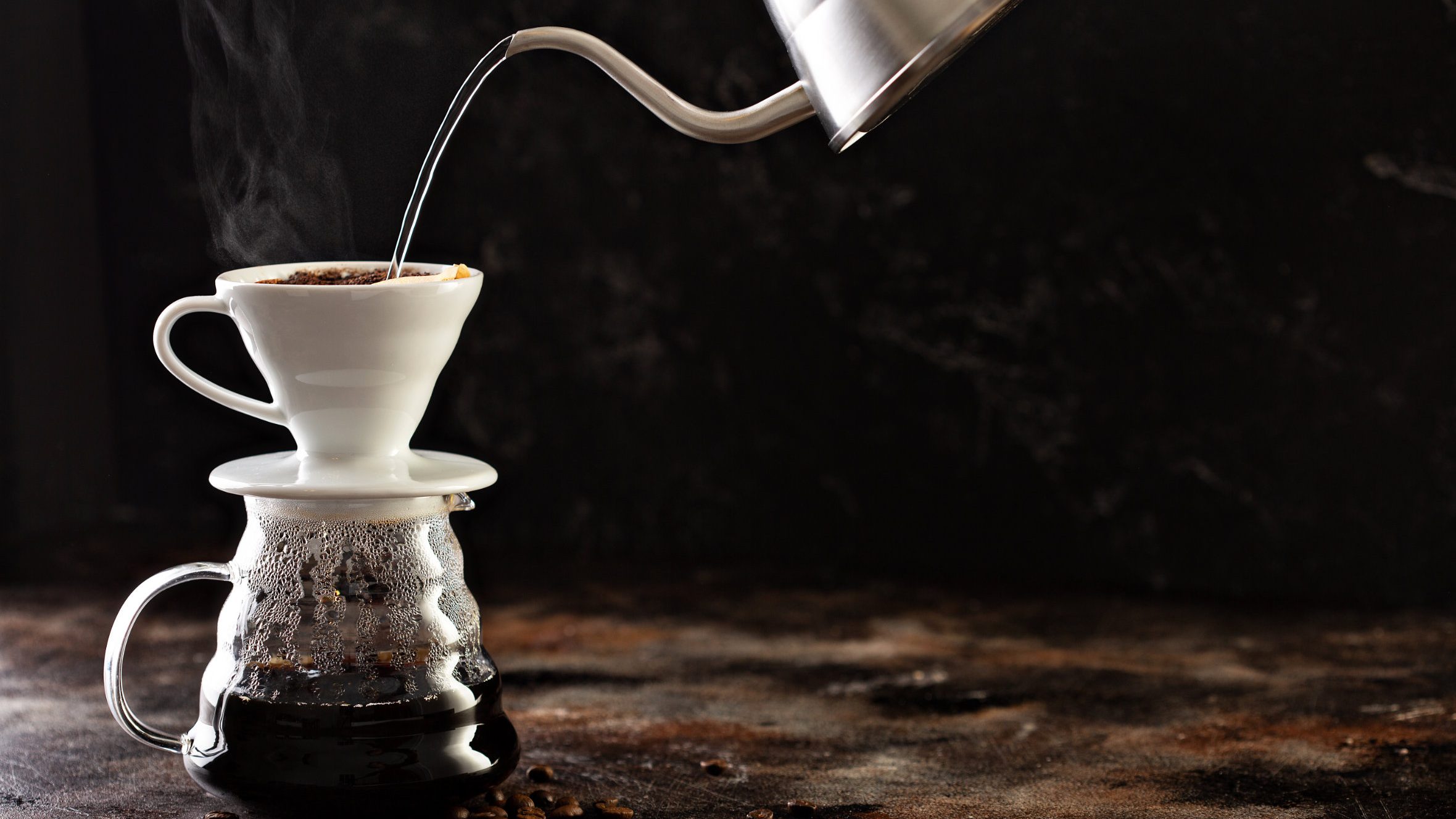
Start with the recommended brewing procedure. When you begin to pour the hot water right after the blooming, watch the color of the foamy surface. If it has a rich caramel color similar to the crema of an espresso, you are good. If the color is somewhat whitish or greyish, your coffee will not have enough flavor and taste rather watery.
The likely reason is that the grind size of your coffee is too coarse. The general recommendation is to use a medium to medium-fine grind for pour-over coffee. But consider this just as a starting point. Depending on the roast level, the coffee varietal, and your brewing device this may not be the appropriate grind size.
Try adjusting the grind to a bit finer than store ground coffee and try again. With a good coffee grinder, you can fine-tune the grind size in small steps. You may have to repeat this a few times until you hit the sweet spot. The reward for your efforts is a well-rounded cup of coffee with a rich and satisfying aroma.
Don't go beyond the sweet spot
Be careful not to go too far in this process. If the grind is too fine, it will clog the filter's pores and slow down the water flow through the coffee grounds. The longer extraction time will cause the release of bitter components into your cup. Avoid this by stopping the filtering process at the 4-minute mark. Throw out the coffee that is remaining in the filter.



0 Comments